How-to
Foam and air drilling: getting cuttings out of a dry hole
Foam lifts what air alone cannot, at a fraction of the annular velocity. Getting the quality right is most of the job.
4 min read
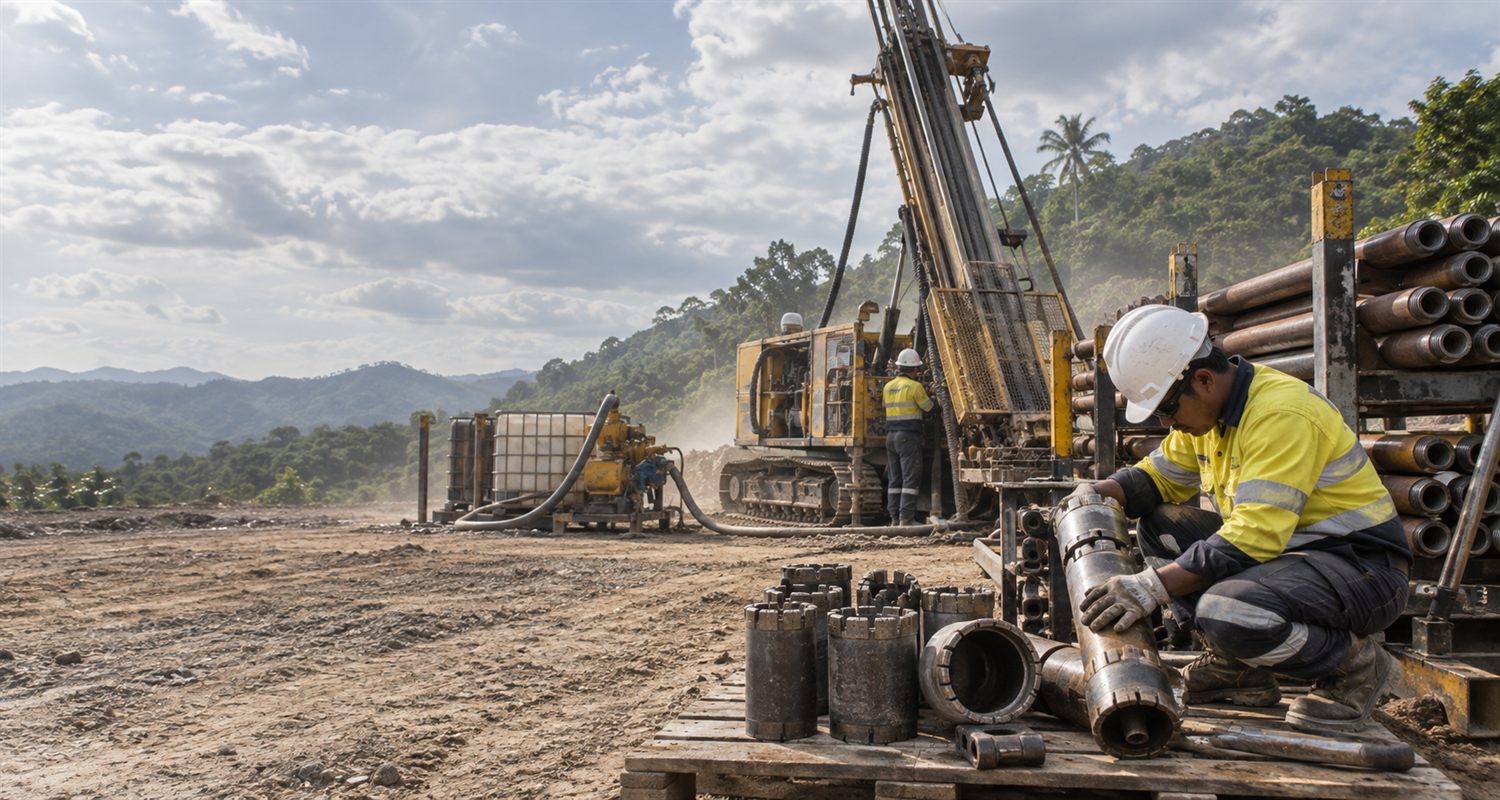
Air drilling is fast and cheap right up to the moment the hole stops cleaning itself. Then it is neither. Foam is what bridges the gap between dry air and a full mud system, and it is the standard answer in RC, air rotary and water-well work where a conventional fluid is either unnecessary or actively unwanted.
Why foam lifts what air does not
Dry air lifts cuttings by velocity alone. That works while the hole is small, dry and competent — and it fails as soon as the annulus enlarges, water enters, or the cuttings get heavy. The required velocity climbs beyond what the compressor can deliver, cuttings fall back, and the hole packs off.
Foam lifts by carrying capacity instead. The bubble structure suspends cuttings mechanically, so it clears a hole at annular velocities far below what dry air needs, and it keeps clearing when water enters the hole rather than turning to mud and slugging.
What a foam system gives you
- Cuttings transport at low velocity, which means a smaller compressor does the same work — or the same compressor drills a larger hole.
- Tolerance of formation water. This is the main reason foam appears on RC programs: it keeps the sample moving when the hole makes water.
- Dust suppression at the cyclone and around the collar, which is a health control as much as a housekeeping one.
- Some hole stability and lubricity, particularly with stiff foam where a polymer is added to strengthen the bubble structure.
- Lower fluid volumes than a mud system, which matters where water has to be trucked in.
Foam quality is the parameter that matters
Foam quality is the proportion of gas in the mixture, and it is what determines whether you have a lifting fluid or an expensive way to make bubbles. Too wet and it behaves like water with air in it; too dry and the structure collapses and you are back to air drilling.
- The mix is air, water and foaming agent injected together, and it is adjusted at the pump and the compressor rather than mixed in a tank.
- Judge it at the collar. Stiff, stable foam returning with cuttings visibly held in it is what you are aiming for; a thin slurry or a spray of wet air is not.
- Adding a polymer produces stiff foam, which carries more, stands up better in a large annulus and tolerates more formation water.
- Follow the supplier’s concentration range as a starting point and adjust from what returns at the collar. The ground and the water will move you off the label figure.
Water quality changes the dose
Foaming agents are surfactants, and hard or saline make-up water knocks their performance down. If the foam suddenly needs more product to do the same job, test the water before you blame the drum — a new water source is the usual culprit.
What to watch for
- Returns that stop being foamy. That is the first sign of a problem, and it is a reason to stop rather than to add air.
- Foam building up on the pad and in the sump. Plan for it — a foam system needs somewhere for the returns to go and time for them to break down.
- Environmental compliance. Foaming agents run to a sump and eventually to ground, so check the product is appropriate for the site’s permit conditions and that the sump has the capacity it needs.
- Hole stability. Foam gives far less wall support than mud. In unconsolidated ground, foam plus casing is the combination; foam alone is not.
When foam is the wrong answer
Foam does not replace a filter cake. If the hole is losing wall in sand or gravel, or you are drilling a formation that needs the support of a fluid column, a bentonite system is the right tool and foam is an expensive way to postpone that conclusion.
Equally, if the hole is making a great deal of water and the ground is stable, sometimes the honest answer is to drill it with water and stop paying for surfactant.
Related in the catalogue