Comparison
Reverse circulation or diamond coring: picking the right hole
Where RC is the cheaper, faster and entirely adequate answer, and where it quietly costs you the deposit.
4 min read
RC and diamond coring are not competing versions of the same thing. One returns chips and the other returns rock, and the choice is really a choice about what question the hole is being drilled to answer. Programs get expensive when a hole is drilled with the wrong one and then re-drilled properly.
What each one actually returns
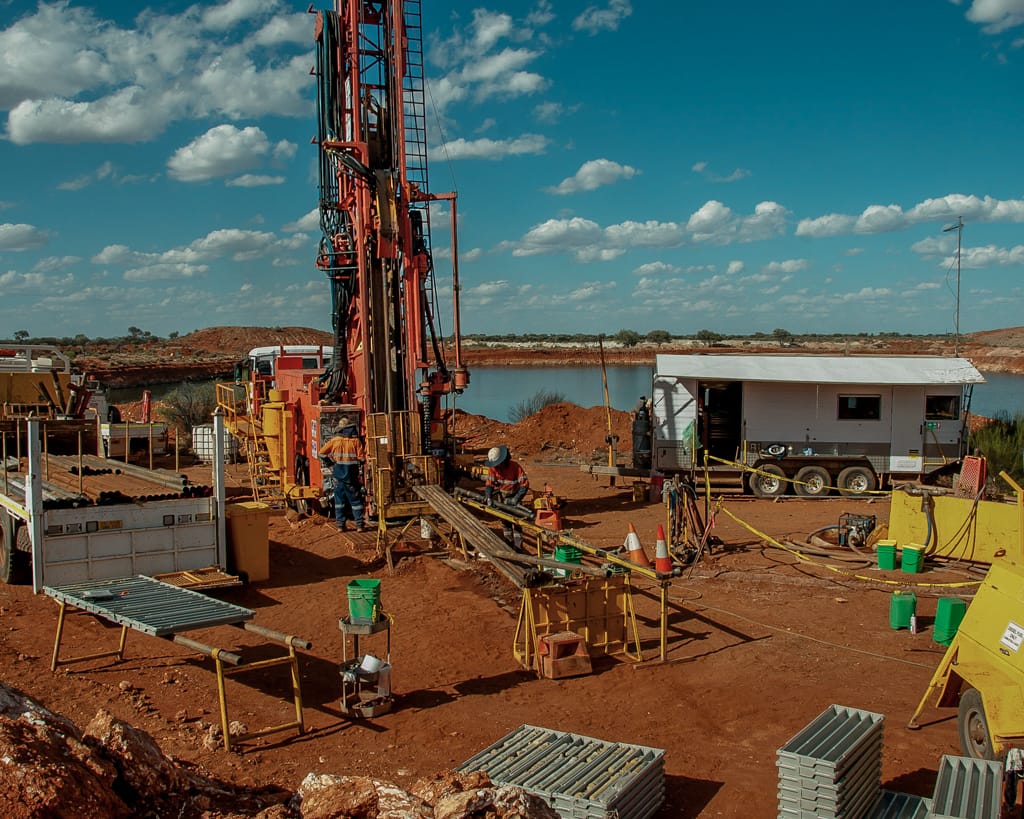
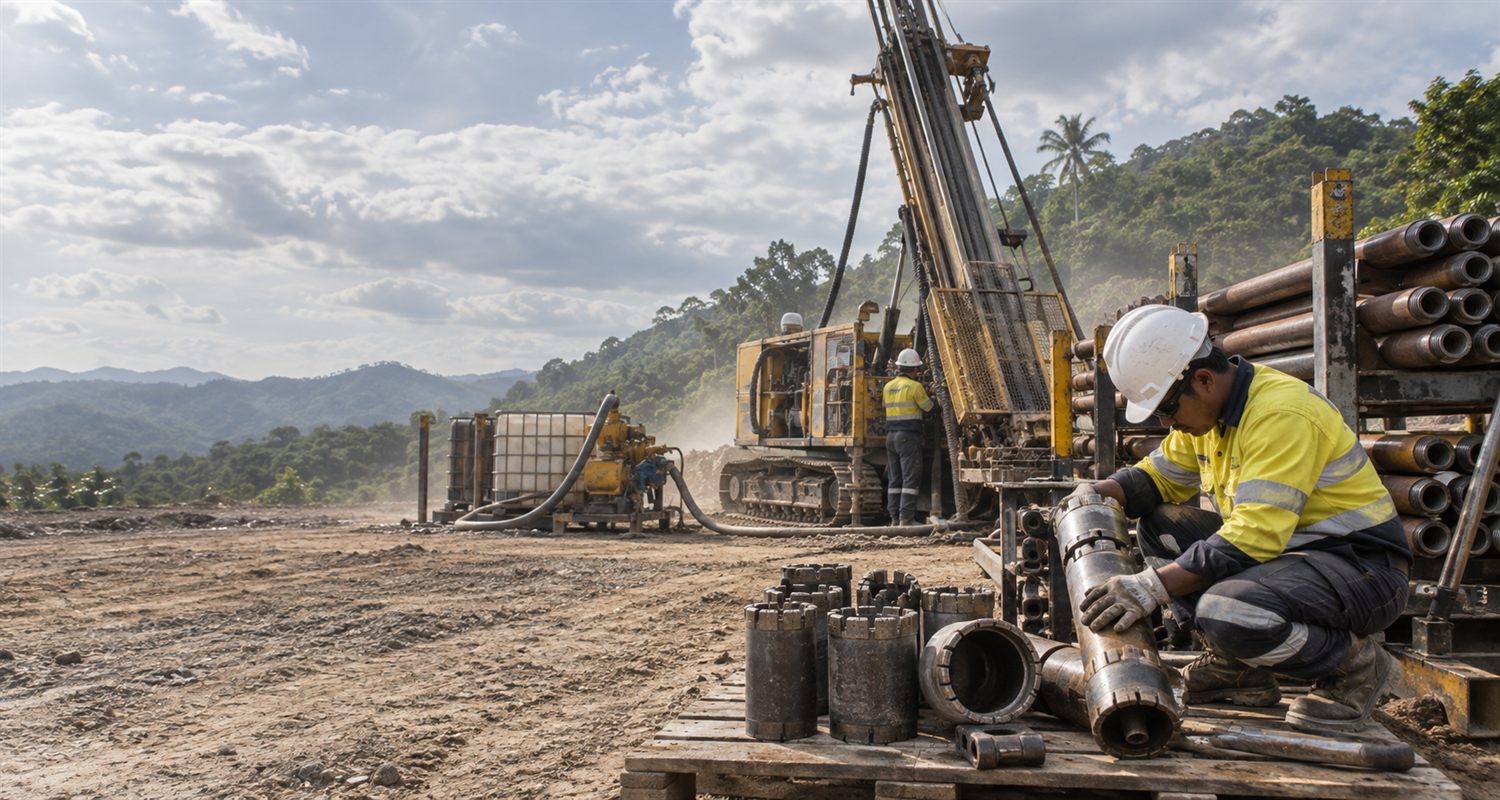
Reverse circulation drills with a hammer or tricone and lifts the cuttings up the inside of a dual-wall rod string, so the sample reaches the cyclone without touching the walls of the hole. That is the whole point of the dual wall: contamination from up-hole material is largely designed out.
Diamond coring cuts an annulus and leaves a solid cylinder of rock, which you recover intact. You get the same assay information plus everything a chip sample can never carry: contacts, veining, alteration textures, structural measurements, geotechnical parameters and the ability to look at it again in ten years.
The metres-per-day gap is real
RC is faster by a wide margin in the ground it suits — often several times the daily metreage of a diamond rig, with no core to handle, cut, log or store. On a first-pass drill-out over a large target, that speed is not a luxury; it is what makes the program affordable at all.
It is also why the sensible answer on most projects is not one or the other. It is RC for coverage and coring for the holes where the geology has to be understood rather than merely assayed.
Where RC quietly fails you
- Below the water table in wet, unconsolidated ground, where sample recovery and sample quality both fall away and the cyclone starts producing slurry rather than chips.
- In deeply weathered saprolite — very common in this region — where the hole caves and the sample smears.
- Anywhere structure matters. A chip sample cannot give you a dip, an alpha angle, or a vein orientation, and no amount of careful logging invents one.
- For geotechnical and metallurgical work, which need intact rock and representative mass.
- At depth. RC capability drops off sharply beyond a few hundred metres, and hole deviation is harder to control and harder to survey.
Sample recovery is the number to watch, not the metres
An RC hole logged at 100 metres with 60 per cent recovery through the mineralised zone has not sampled that zone. Weigh the sample bags against expected mass per metre and treat a shortfall as a data-quality flag, not a nuisance.
The pre-collar, and the hole that is both
The most economical structure on many programs is a hybrid: drill the barren, weathered cover as an RC pre-collar, then set casing and continue as a diamond tail through the target. You buy the top of the hole at RC rates and the important part of it at coring quality.
It only works if the pre-collar is drilled straight enough and cased well enough that the diamond rig can pick it up. That means surveying the pre-collar before demobilising the RC rig, not after.
The consumables the two commit you to
| Reverse circulation | Diamond coring | |
|---|---|---|
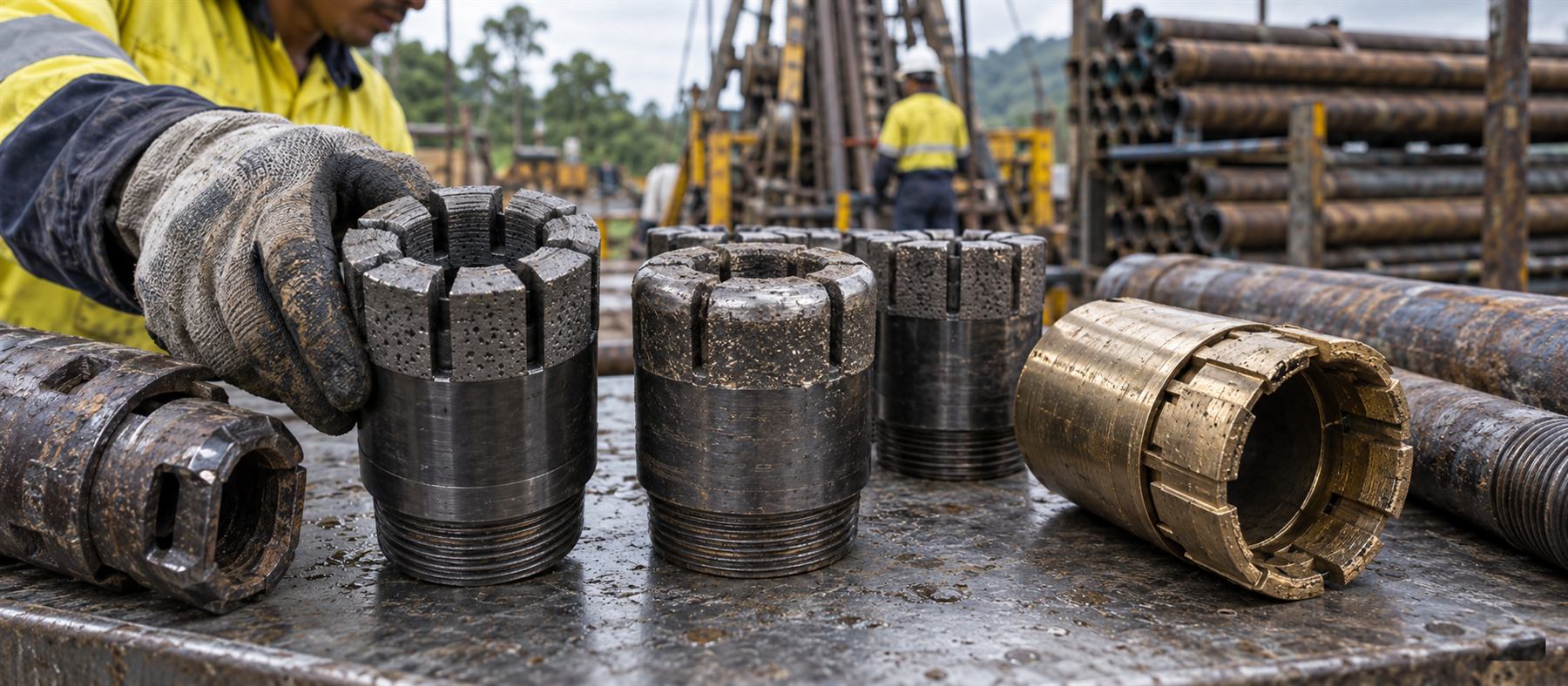
| Cutting tool | RC hammer and bit, or tricone | Impregnated or surface-set core bit and reaming shell |
| String | Dual-wall RC rods, crossovers, sub-assemblies | Wireline rods, core barrel, inner tube assemblies |
| Air and fluid | Large compressor and booster; foam and drying agents downhole | Mud pump; bentonite, polymer and additives |
| Sampling kit | Cyclone, cone splitter, sample bags in volume | Core trays, blocks, saw, racking, shed space |
| Where the cost lands | Fuel, air, hammer and bit consumption | Bits, rods, fluid, and the labour to handle core |
A short way to choose
- If the hole exists to test whether metal is present over a wide area, and the ground is dry and competent, drill RC.
- If the hole exists to explain why the metal is there, or will feed a resource model, a geotechnical study or a metallurgical test, drill core.
- If the cover is thick, barren and drillable by air, pre-collar it with RC and core the rest.
- If you are below the water table in weathered ground, stop assuming RC will work and price the coring option honestly.
Related in the catalogue