Maintenance
Why drill rods fail at the thread, and what it costs to stop it
Galling, washouts and fatigue cracks all start in the same place. Most of the causes are handling, not metallurgy.
4 min read
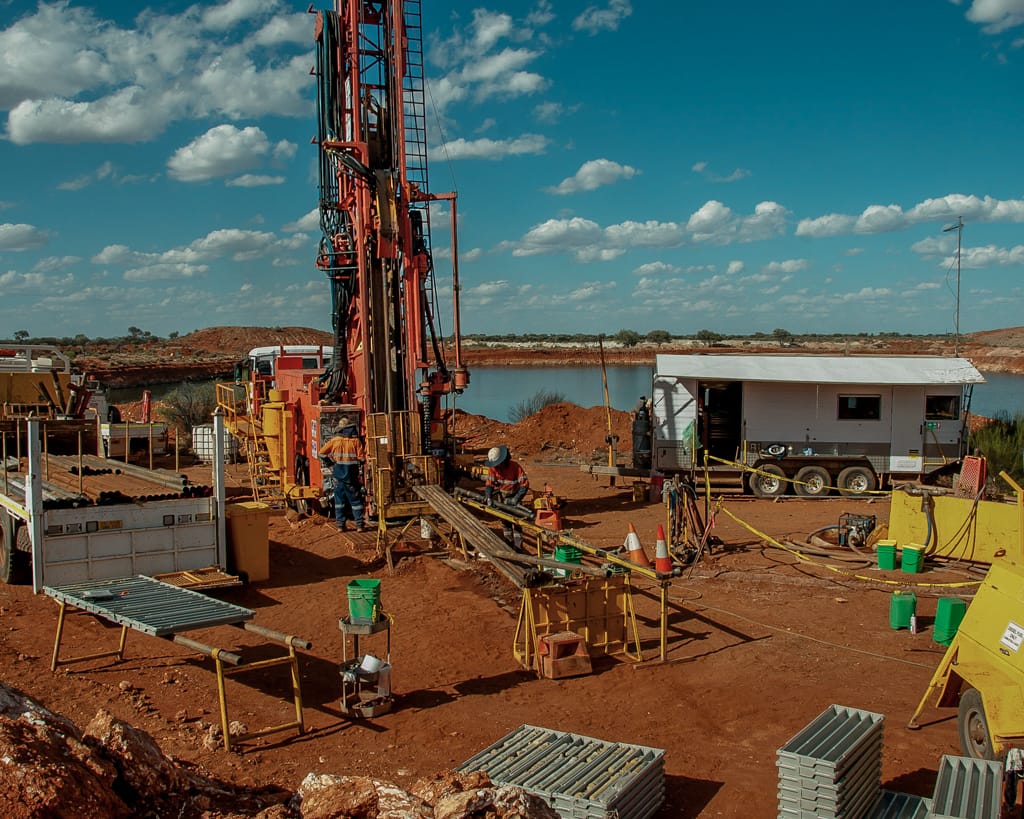
A wireline rod is a long steel tube with two precision-machined ends, and the tube almost never fails. The ends do. Threads gall, boxes split, pins wash out and fatigue cracks propagate from the last engaged thread — and the cause is nearly always something that happened on the rig floor rather than something that came out of the mill.
The four failures, and what each looks like
| Failure | What you see | Usual cause |
|---|---|---|
| Galling | Torn, smeared metal on the thread flanks; the joint gets harder to break each time | Dry or under-greased threads, cross-starting, or too much make-up torque |
| Washout | A pinhole or slot eroded through the pin near the shoulder, often found by a pressure drop | A joint that never seated properly, so fluid found a path across the shoulder and cut its way out |
| Box split | A longitudinal crack from the mouth of the box | Over-torque, or grease packed into the box so the pin hydraulically wedges it open |
| Fatigue crack | A clean, flat crack circling the last engaged thread | Cyclic bending in a crooked hole, run past its life; usually a rod that has been in service too long |
Grease: the right amount is less than people use
Rod grease has one job — to keep the thread flanks from welding to each other under load — and it does that job with a thin, even film on the pin threads. It does not need to fill the box.
- Apply to the pin, not into the box. Grease that ends up in the bottom of a box has nowhere to go when the pin lands on it, and the pressure it generates is what splits boxes.
- Use a purpose-made rod grease, not general-purpose chassis grease. Rod compounds are formulated for the load and to wash off the core and the hole cleanly.
- Cover the whole thread. A patch of bare thread is where the gall starts, and once it starts it spreads along the flank every time the joint is made.
- Keep the tub covered. Grit in the grease is an abrasive paste sitting exactly where you least want one.
Make-up: cleanliness and alignment beat torque
Most galling is started by a cross-start. If the pin is not square to the box as it engages, the first thread rides over the second and the damage is done before the wrench touches it. That means the rod handler and the mast alignment matter as much as the driller does.
Torque itself is a smaller lever than crews expect. A joint made up hard is not safer than one made up correctly; it is a joint with the elastic range already used up, which is why over-torqued strings break out badly and split boxes.
A joint that is getting harder to break is telling you something
Rising break-out torque on the same joint over consecutive trips is early-stage galling. Pull that rod and inspect it while it is still a rod, rather than after it has become two rods and a fishing job.
The hole does half the damage
Fatigue cracking at the last engaged thread is a bending problem, and bending comes from a crooked hole. A string rotating through a dogleg is being flexed once per revolution, several hundred times a minute, for the whole shift. No thread compound helps with that.
The fixes are upstream: a properly set-up and aligned mast, a stable collar, sensible weight on bit, and a survey program that tells you the hole is deviating before it has deviated far. Rods that keep failing at one depth interval are pointing at a dogleg, not at a bad batch of steel.
Rotation, inspection and records
- Rotate the string. The rods nearest the collar do the most rotating and the least loading; the ones at the bottom see the opposite. Swapping the string end for end at a set interval spreads the wear.
- Inspect threads on every trip out, not on a schedule. It takes seconds per joint and it is the only inspection that happens at the right moment.
- Retire on evidence, not on hope. A pin with a torn flank or a box with a lip is not going back in the hole because the program is behind.
- Keep the rods that come out of service. A rod with a fatigue crack is a data point about the hole, and worth showing to whoever sets the drilling parameters.
- Track metres per rod string. It is the only way to know whether a change in grease, handling or supplier actually did anything.
Related in the catalogue