Troubleshooting
Poor core recovery: what to check, in order
Recovery falls for about six reasons. Working through them in the right sequence saves a shift of guessing.
5 min read
Recovery drops, and the first instinct is to blame the ground. Sometimes that is right. More often something in the barrel is worn, mismatched or assembled wrong, and it has been that way for several runs. Here is the order to check, cheapest and most likely first.
Measure it before you diagnose it
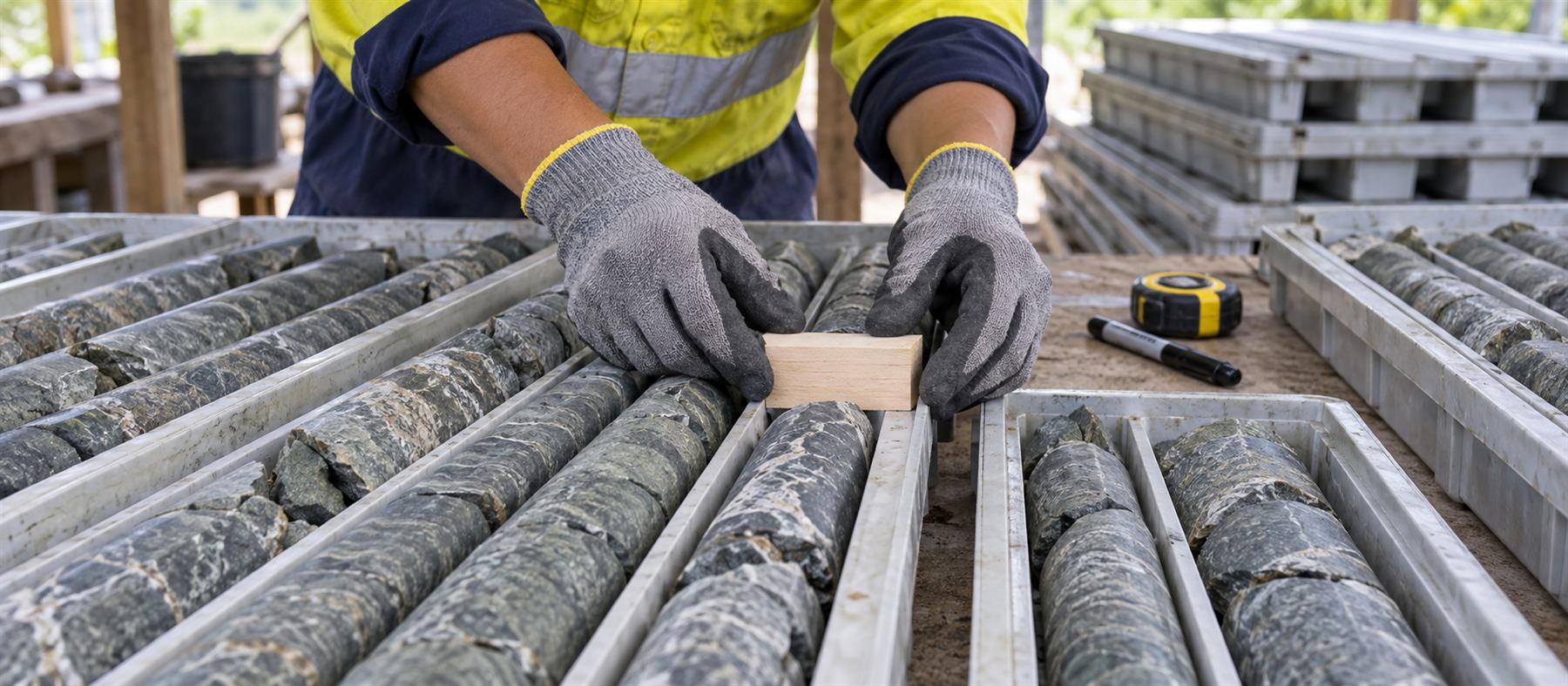
Recovery is measured length of core against length drilled, and it needs to be recorded per run, by the crew, at the rig. A number reconstructed later in the shed is too coarse to point at a cause, because the cause usually lives in one or two specific runs.
If recovery is poor in every run at every depth, look at the equipment. If it is poor only through particular intervals, look at the ground and at how the equipment is being run through that ground.
1. The core lifter and its case
This is the first thing to check and the most common single cause. A core lifter that has lost its grip does not hold the core when the barrel is lifted, and the core drops back down the hole to be re-ground on the next run.
- Check the lifter for wear on the internal serrations and for the taper that lets it close. A polished, rounded lifter has stopped gripping.
- Check the lifter case. The case wears too, and a worn case gives the lifter nowhere to wedge against.
- Check you are running the right lifter for the ground. Soft, friable material needs a different lifter than competent rock, and running one type through everything guarantees poor results in half of it.
- Replace them as a set and as a consumable. Lifters are cheap relative to a re-drilled interval.
2. Tube configuration for the ground
A double tube barrel is fine in competent rock. In broken, friable, clay-rich or intensely fractured ground it will grind and mix the core, and no adjustment of drilling parameters will fix that.
Triple tube with a split inner is the answer in that ground. The core is not disturbed on extraction, it comes out in order, and the geologist gets to see fabric that a double tube destroys. It is slower and it costs more; it is also the difference between a logged interval and a bag of rubble.
Shorter runs are the free fix
Before changing any hardware, halve the run length through the bad interval. Less core in the tube means less weight bearing on the lifter and less time for the material at the bottom of the tube to be ground by what is above it. It costs trip time and nothing else.
3. Blocking and jamming
A blocked inner tube stops taking core, and the bit then grinds away everything it cuts for the rest of the run. The tell is a run that comes back with a fraction of its length and a sharp rise in pressure partway through the run — which the driller will have felt.
- Watch the pressure gauge and pull on the block rather than drilling through it. Every metre drilled after a block is an interval destroyed.
- Check the inner tube for a bur, a dent or dried mud from the previous run.
- Check the water inlet and the inner tube bearing. If the inner tube is rotating with the outer, it is grinding the core rather than holding it.
- In blocky ground, expect blocks. Shorter runs again.
4. Bit, reaming shell and clearance
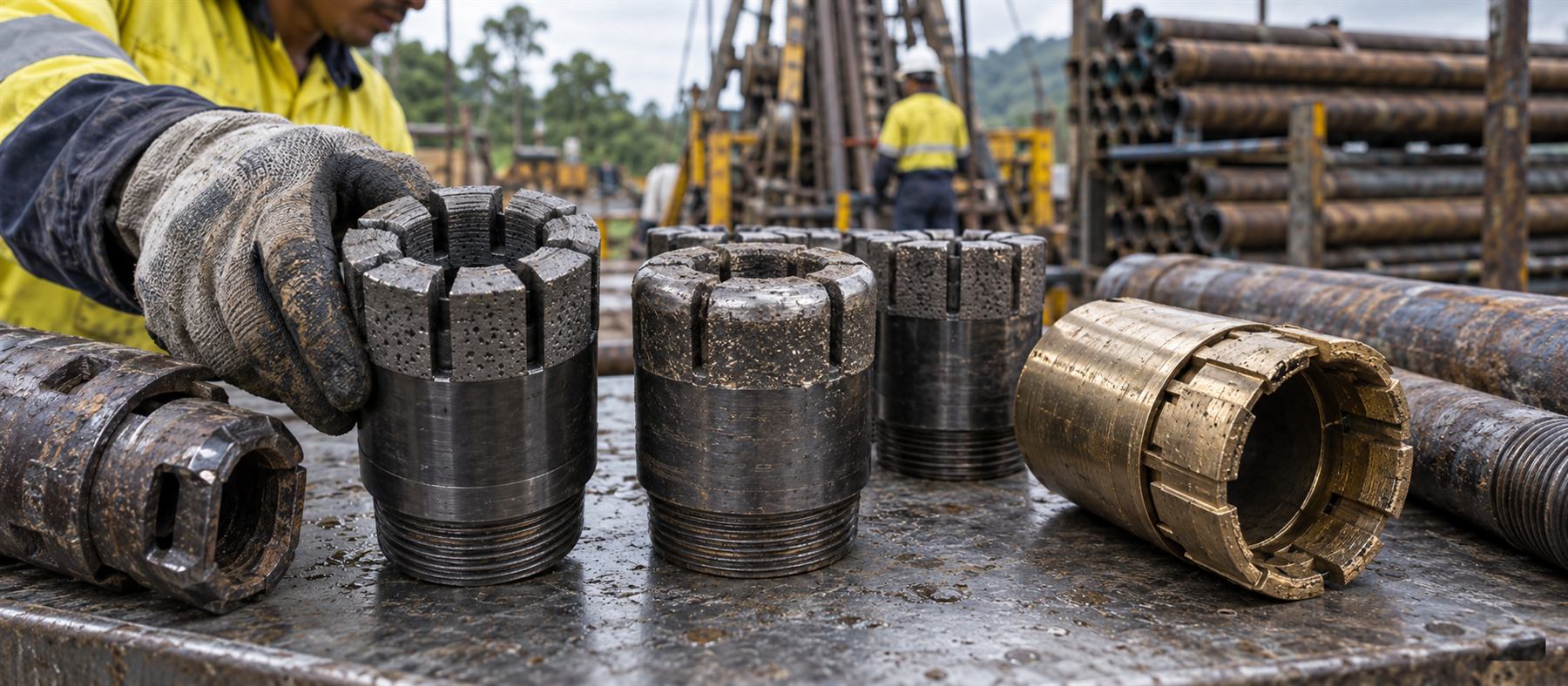
A bit worn under gauge, or a reaming shell that is no longer holding the hole to size, changes the clearance around the core and the flow past it. Both show up as recovery problems long before anyone calls it a bit problem.
A bit whose inside diameter has worn oversize also produces core that is undersized for the lifter, which brings you back to problem one by a different route.
5. Drilling parameters and flush
- Too much water pressure will wash friable core out of the tube. In soft ground, reduce flow to the minimum that still cools and cleans.
- Too much weight on bit in broken ground fractures core before it enters the tube.
- Rotation speed that is fine in competent rock will churn core in clay. Slow down through the bad interval and accept the metres.
- Rough handling of the barrel at surface — dropping it, hammering it out — loses core that survived everything downhole.
6. Then, and only then, the ground
Some intervals will not give full recovery with any equipment: open voids, running sand, deeply weathered clay, heavily sheared gouge. If the first five checks are clean and the loss is confined to one geological unit, that is a finding rather than a fault, and it belongs in the log where the resource geologist will see it.
Record it honestly. A resource model built over intervals with unrecorded 50 per cent recovery is a model with a grade bias nobody can find later.
Related in the catalogue