Field notes
Hydraulic hose failures, and why crimping on site changes the arithmetic
Hoses rarely fail from pressure. They fail from routing, contamination and an assembly that was never matched properly.
4 min read
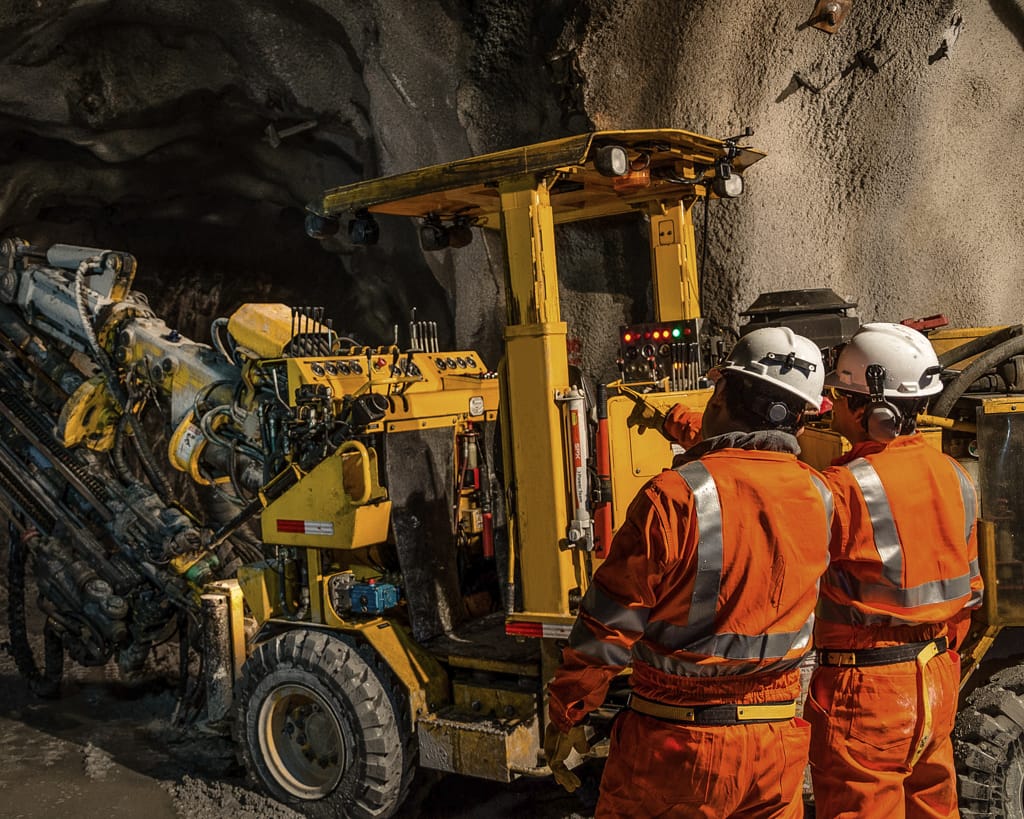
A burst hose on a jumbo at the face is a few hundred pesos of rubber and most of a shift of production. The interesting part is that the burst is almost never a pressure failure — the hose was rated for the pressure. It failed because of where it was routed, what was inside it, or how the fitting was attached.
Why hoses actually fail
| Cause | What you find | The fix |
|---|---|---|
| External abrasion | Cover worn through on one face, often at a rub point on the boom or frame | Reroute, clamp properly, fit sleeving at the contact point |
| Bend radius too tight | Kinked or flattened section, reinforcement failure at the bend | Longer hose, different fitting angle, or a routing change |
| Fitting blow-off | Hose pulled clean out of the ferrule, ferrule undamaged | Wrong crimp diameter, mismatched components, or a worn die |
| Contamination | Scored valves and cylinders as well as hose damage | Clean assembly practice, capping, filtration |
| Pressure spikes and fatigue | Reinforcement fatigue, pinhole leaks after long service | Correct hose construction for the impulse duty, and life-based replacement |
| Age and heat | Hardened, cracked cover; the hose is stiff to the hand | Scheduled replacement rather than run-to-failure |
The assembly has to be matched, end to end
A hose assembly is a designed system: a specific hose, a specific fitting, a specific ferrule and a specific crimp diameter, validated together by the manufacturer. Mixing a fitting from one maker with a hose from another produces an assembly nobody has tested and nobody warrants.
- Crimp to the specification for that exact combination, measured with a caliper on every assembly. Not by eye, and not by the machine’s dial alone.
- Check the dies. Worn or wrong dies produce an under-crimp that holds on the bench and lets go under impulse pressure.
- Skive only where the hose type requires it, and to the depth specified. Over-skiving cuts reinforcement.
- Cut square, and cut with a proper cutter. A ragged cut leaves reinforcement wires proud, which is both a leak path and a hazard to the hands fitting it.
Fluid injection injuries are a surgical emergency
A pinhole leak in a high-pressure line will inject fluid through skin with no obvious wound and very little pain at first. Never search for a leak with your hand — use a piece of card. Anyone who suspects an injection injury needs immediate hospital assessment, and it should be treated as such regardless of how minor it looks.
Cleanliness is a hydraulic component
Most hydraulic system failures are contamination failures, and a new hose assembly is one of the more common ways contamination gets introduced. The cutting operation produces fine rubber and wire particles inside the bore, and those go straight into a valve block the first time the machine runs.
- Blow or pig every assembly through after cutting and crimping, before it is capped.
- Cap both ends immediately. An uncapped assembly in a store or on a vehicle is collecting the dust it will later deliver.
- Keep the crimping area clean and separate from grinding and welding.
- Fill and bleed properly on installation, and check the return filter after the first shift on a repaired machine.
Why crimping on site changes the arithmetic
The cost of a hose failure is dominated by downtime, and downtime is dominated by lead time. A machine waiting on an assembly built in a city three hundred kilometres away is down for a day or two; the same machine with a crimper, dies and hose stock on site is down for an hour.
- It removes the temptation to improvise. Crews with no way to make a correct assembly will find a way to make an incorrect one.
- It lets you build to the length actually needed, which fixes the routing and bend-radius problems that caused the failure in the first place.
- It requires discipline in return: matched components, correct dies, measured crimps and a stock of the right hose types — otherwise it just makes bad assemblies faster.
- A mobile crimping capability that comes to the site does the same job for operations that cannot justify their own workshop.
Related in the catalogue