Maintenance
Mine rail and haulage: the consumables that stop the derailments
Gauge spread, worn fishplates and a blocked drain cause most of them, and all three are cheap to fix on a schedule.
4 min read
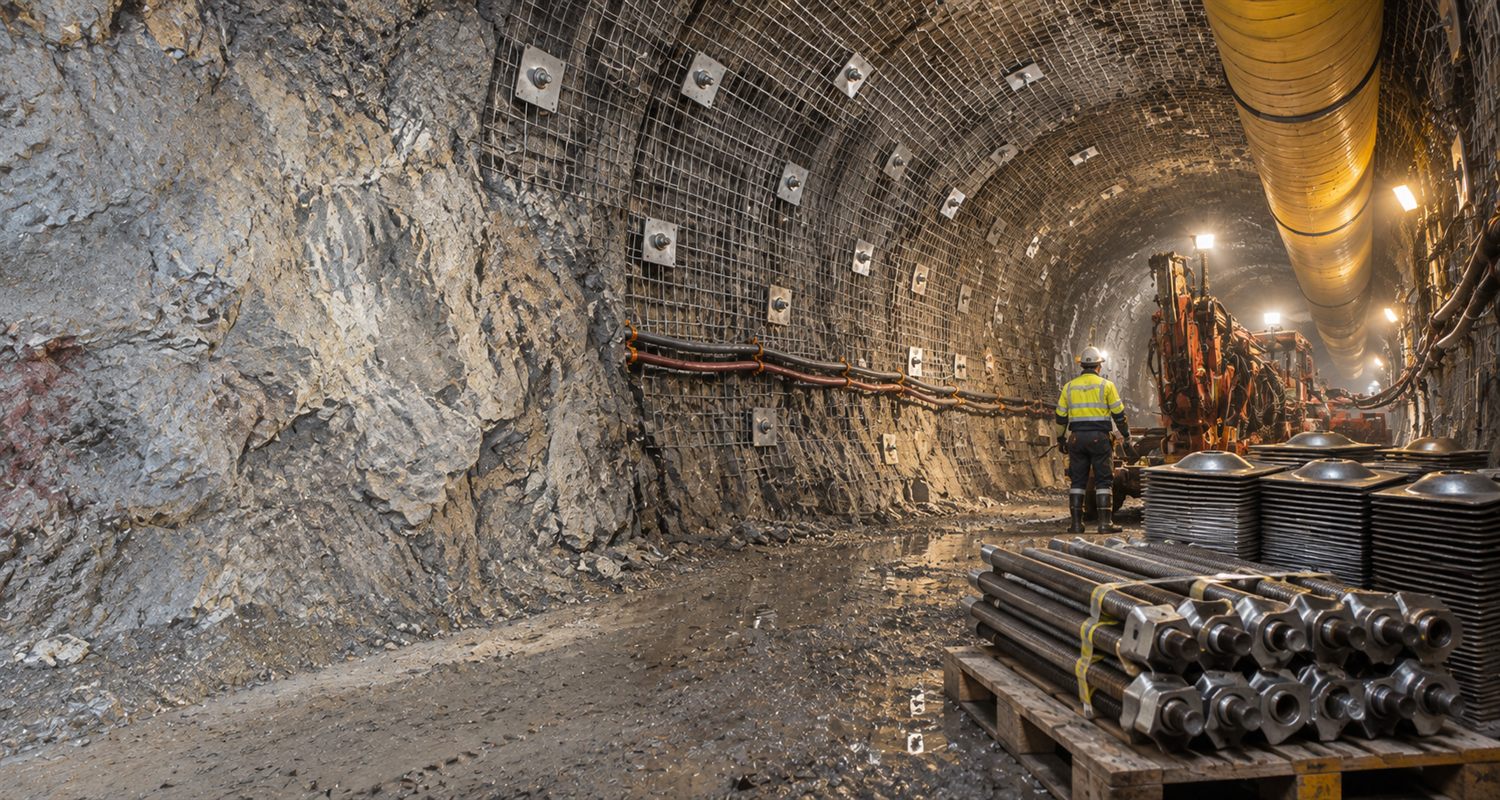
Rail haulage is the cheapest way to move ore underground and the easiest system to let deteriorate quietly, because it keeps working — slightly worse each month — right up until a loaded train comes off in a travelway. Almost everything that causes that is a consumable that was not replaced.
Gauge is the number that matters
Gauge spread is the leading mechanical cause of derailment underground. It happens gradually: sleepers rot or crush, fastenings loosen, the rail foot works sideways, and the track widens a few millimetres a month until a wheel flange drops inside the rail.
- Measure gauge on a schedule, at fixed chainages, and trend it. A single measurement tells you nothing; a series tells you where the track is moving.
- Check it hardest on curves, at switches and anywhere water sits. Those three account for most of the movement.
- Fastenings — dog spikes, clips, plates — are the cheapest item on the whole system and the one whose absence causes the most expensive events.
- Replace crushed and rotted sleepers rather than adding packing. Packing a bad sleeper transfers the problem to its neighbours.
Joints, fishplates and rail wear
The joint is the weakest point in any rail run and it takes the highest dynamic load, because every wheel strikes the discontinuity. Worn or loose fishplates let the joint work, the rail ends batter down, and the batter accelerates the wear on everything downstream of it.
- Keep fishplate bolts tight and complete. A joint running on two of four bolts is a joint that will fail.
- Replace battered rail ends before they start damaging wheels. A hammered joint is a wheel-flat generator.
- Watch for side wear on the high rail through curves — that is where gauge face wear concentrates and where lubrication earns its keep.
- Match rail profile and weight when you replace a length. Mixing profiles at a joint creates a permanent step.
Track standards are the mine’s, not this article’s
Gauge tolerances, permitted rail wear limits, inspection frequency and derailment reporting are all set by the mine’s own engineering standards and by the regulator. Treat everything here as a maintenance mindset, not as a specification to work to.
Drainage does more damage than tonnage
Standing water is the quiet killer of underground track. It rots timber, corrodes fastenings, softens the ballast bed and hides the condition of everything below the waterline. A drain that has been blocked for six months has aged that section of track by several years.
Clearing drains is unglamorous and it is the single highest-return maintenance activity on a rail haulage system.
Cars, wheels and couplings
| Component | What to watch | Consequence of leaving it |
|---|---|---|
| Wheels | Flange wear, flats, profile | Climbs the rail on curves; accelerates gauge face wear |
| Bearings and axles | Heat, noise, play, lubrication | Seizure, then a dragged car and a derailment |
| Couplings and pins | Elongation, cracking, missing retainers | Separated train, runaway car |
| Car body and doors | Cracks, distortion, tipping mechanism | Spillage on the track, which causes the next derailment |
| Brakes and drags | Function, adjustment, wear | The failure that turns an incident into an injury |
The supply position
- Hold rail, sleepers, fishplates, bolts and fastenings as standing stock. Track repairs are always urgent by the time they are raised.
- Standardise on one rail weight and one fastening system per level wherever the layout allows it. Mixed systems double the stores holding and get fitted wrong in the dark.
- Keep switch and crossing components on the critical spares list. They have the longest lead time and the highest consequence.
- Stock wheel sets and coupling components against the fleet you actually run, not the fleet on the original drawings.
- Check deliveries against specification — profile, weight, hole pattern, length — before they go underground. Wrong material discovered at the face is a shift lost.
Related in the catalogue