Procurement
Keeping a remote site supplied: lead times, stock and cost per metre
What to hold, what to order against, and why the cheapest quote is frequently the most expensive delivery.
5 min read
A drilling program in Mindanao or the Cordilleras is a logistics problem with some geology attached. The consumables are not exotic and the prices are not mysterious; what decides the cost of the program is whether the right item is at the rig on the day it is needed, and almost every avoidable cost overrun traces back to that one sentence.
Cost per metre is the only number that settles arguments
Consumables are usually quoted per item and argued about per item, which is the wrong unit. What the program spends is the total of consumables, rig time, crew, fuel, mobilisation and standdown, divided by the metres in the ground.
Once you put it that way, a bit that costs 20 per cent more and drills 60 per cent more metres is obviously cheaper, and a day of standdown waiting on a delivery is obviously worth more than the freight surcharge that would have prevented it. Both of those arguments are unwinnable in any other unit.
Rig standdown is the dominant term
On most programs the daily cost of having a rig and crew on site and not drilling dwarfs the value of any single consumable line. Any stock policy that does not start from that fact will systematically under-hold and over-expedite.
Understand which lead time you are actually facing
| Source | Realistic lead time | What it is good for |
|---|---|---|
| Held in stock, Davao or Laguna | Same-day dispatch, then transit | Everything the program consumes routinely |
| In country but not held | Days, plus transit to site | Second-tier items where a short wait is tolerable |
| Imported to order | Weeks, plus customs clearance and transit | Specialised or non-standard items that must be planned, never reacted to |
| Air freight expedite | Fast and expensive, and still needs clearance | A rescue, not a supply strategy |
The transit leg is the one that surprises people. Ex-warehouse to a remote pad can be a longer and less predictable journey than the ocean freight that brought the item into the country, particularly during the wet season when a single washed-out crossing puts a site out of reach.
What to hold on site
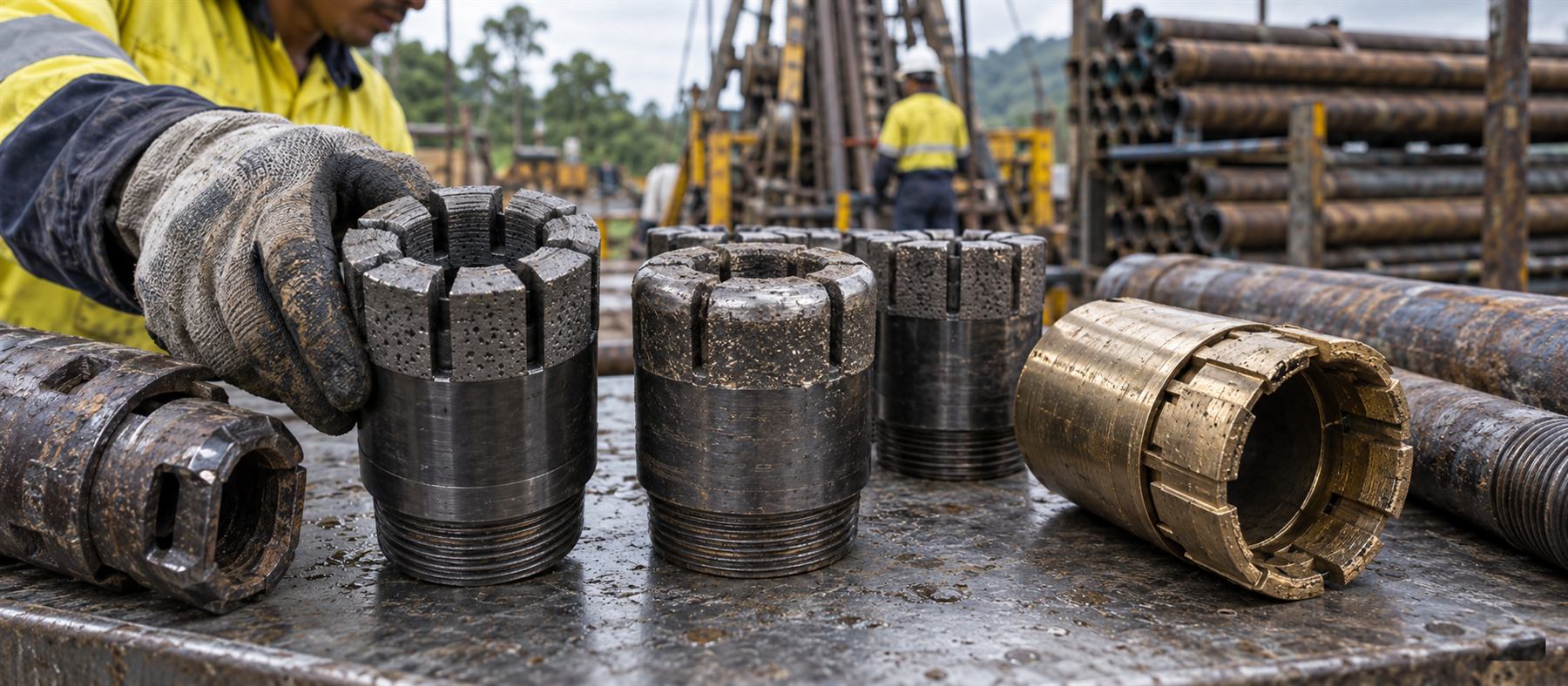
- Anything whose absence stops the rig: bits, core lifters, lifter cases, inner tube spares, hammer oil, rod grease.
- A spare of every single-point-of-failure item: one orientation tool, one hammer, one pump end. If there is one of it and the hole cannot continue without it, there needs to be two.
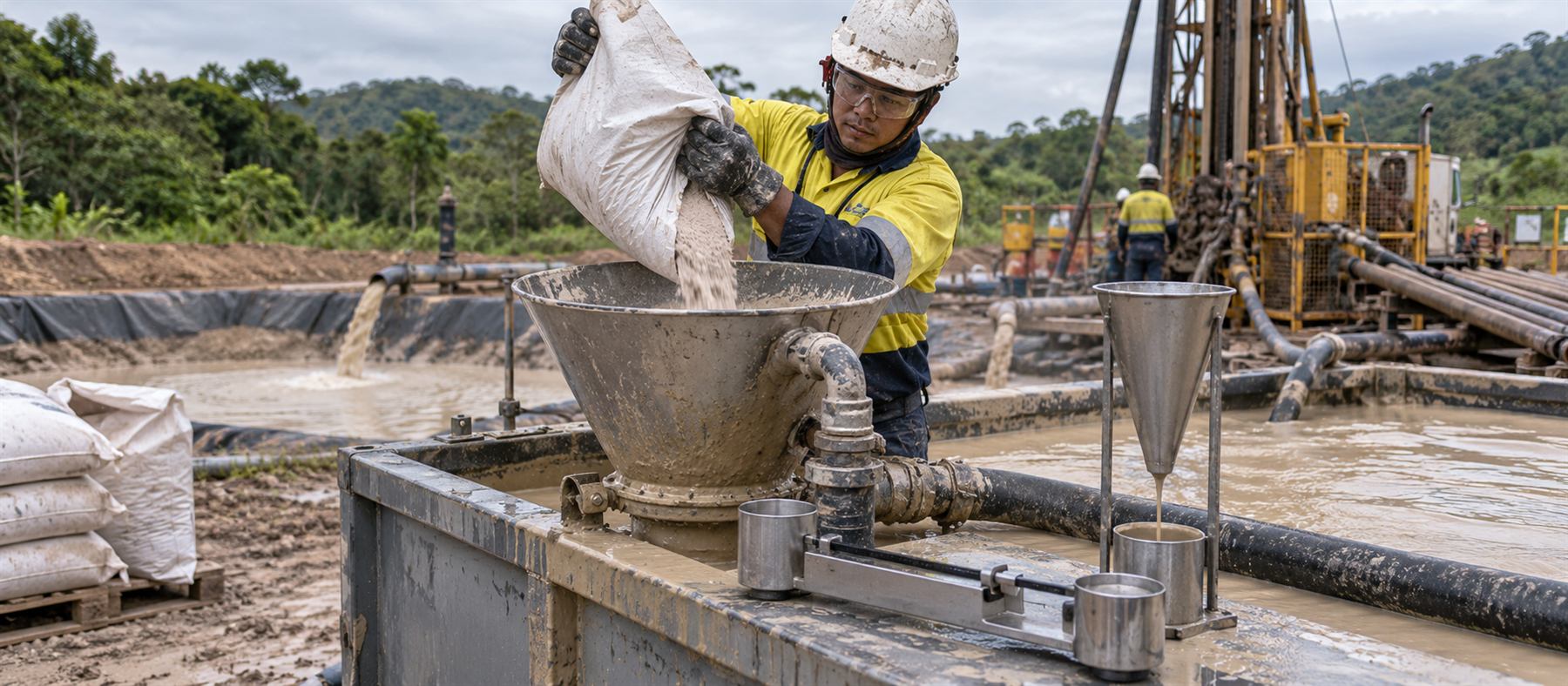
- Enough fluid product to survive one interruption to resupply, not one shift. Bentonite, polymer and LCM are bulky and always needed at short notice.
- The casing string you might have to set. Casing ordered when it is needed arrives after the hole is lost.
- Consumable safety and PPE stock, which is the first thing to run short and the first thing that stops work when it does.
A stock policy that survives contact with a program
- Set min and max levels against consumption per metre, then review them after the first thousand metres. The first estimate is always wrong, and the correction is always informative.
- Reorder at the minimum, not at zero, with the reorder point set to cover the real lead time including transit.
- Standardise sizes ruthlessly. Every extra size series in the yard multiplies the holding without adding capability.
- Track dead stock and stop reordering it. Money sitting in the wrong item is money not available for the right one.
- Count what is actually there, physically, on a schedule. A stores system that disagrees with the shelf is worse than no system, because people trust it.
Getting a quote back that you can actually use
Most delays in quoting are caused by the enquiry, not the supplier. A request that specifies the size series, the quantity, the delivery point and the date needed can be priced and confirmed in hours. One that says "core bits, please quote" cannot.
- Give the size and series exactly — NQ, HQ, PQ, and the matrix or grade if you know it.
- State the quantity and whether it is a one-off or a call-off against a program.
- Name the delivery point, including the last practical road access, and say who receives it.
- Say when it is needed. A date changes what gets offered, and an honest date gets a better answer than an artificially urgent one.
- Send the specification or a photograph if the item is unusual. Sourcing hard-to-find equipment is routine; guessing what was meant is not.
The part that is not a transaction
A supplier who knows the program can hold stock against it, flag a lead time before it becomes a problem, and tell you honestly when something will not arrive in time. A supplier who only ever sees urgent one-line enquiries cannot do any of that, and will not.
Share the drilling schedule. It costs nothing and it converts a series of emergencies into a plan.
Related in the catalogue