Comparison
Wireline or conventional core drilling: which one the program needs
What each system costs you in trip time, capital and core quality, and the holes where conventional still wins.
5 min read
Almost every mineral exploration hole in the country is drilled wireline, and for good reason. But conventional core drilling has not disappeared, and picking the wrong one for a shallow geotechnical program is a real way to spend money you did not need to spend. Here is the difference, stated in the terms that decide it.
The one difference everything else follows from
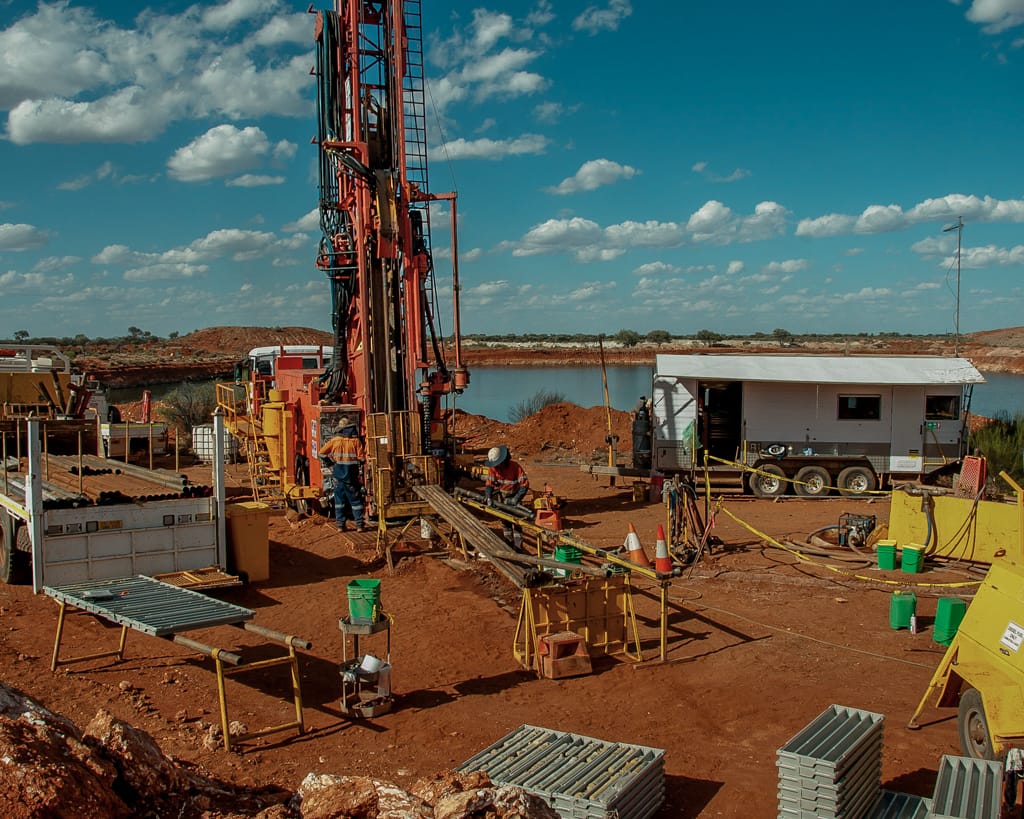
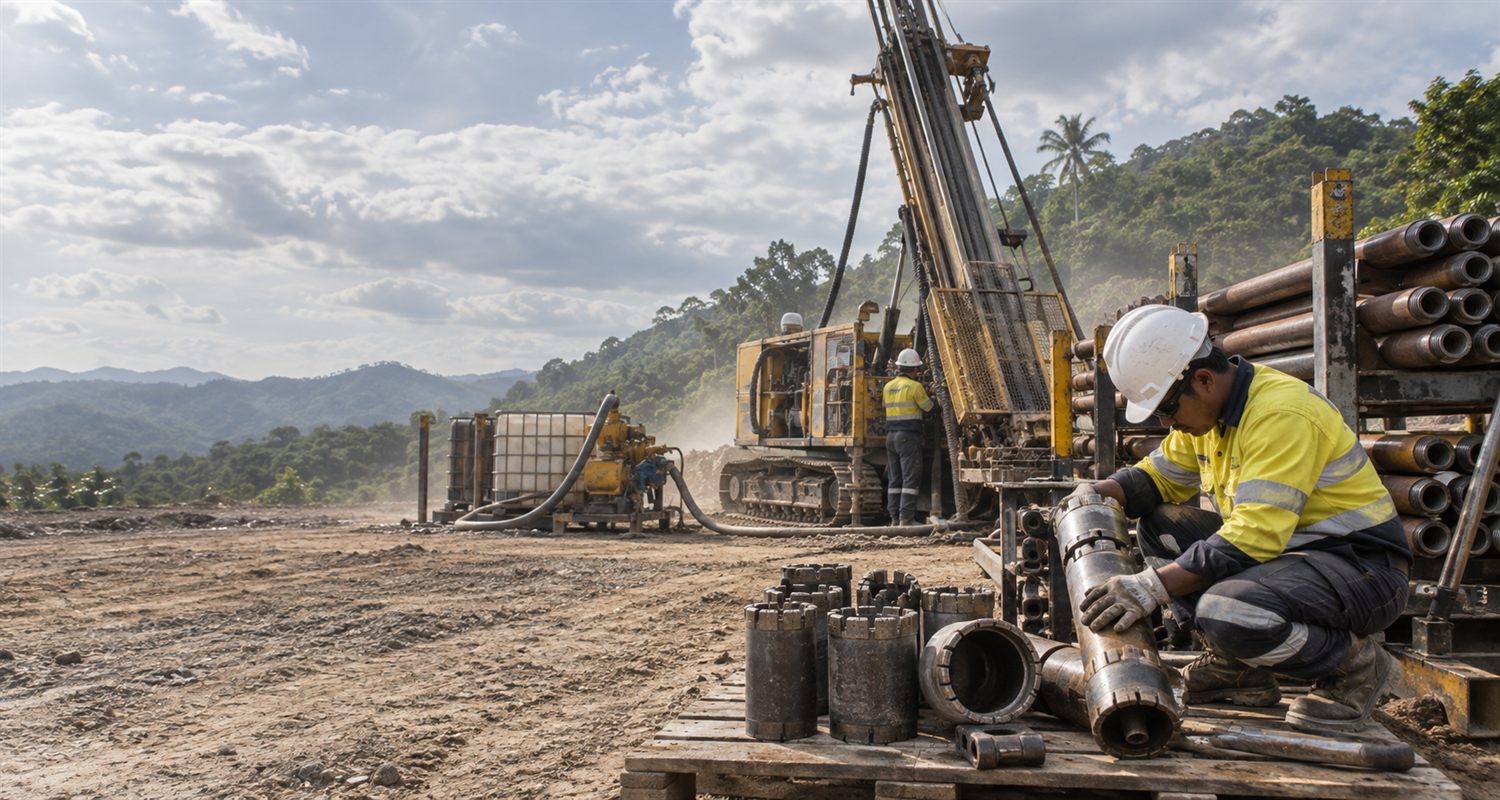
In conventional core drilling the core barrel is part of the rod string. To get the core out you pull the entire string, rod by rod, and then run it all back in. In wireline drilling the rods stay in the hole: an overshot is dropped on a cable, latches onto the inner tube assembly, and winches just the core and its tube to surface.
That is the whole distinction. Every other difference between the two — cost, depth capability, hole stability, consumable spend, crew size — is a consequence of whether the rods come out of the hole every run or stay in it.
The trip-time arithmetic
Conventional trip time grows with depth. Every three metres of core costs you a full round trip of the string, so at 40 metres the penalty is tolerable and at 300 metres it is most of the shift. Wireline trip time is close to flat: the overshot falls at roughly the same rate whether the hole is 80 metres or 800, and only the winch line gets longer.
The crossover in practice sits somewhere around 50 to 60 metres. Below it, the two systems are close enough that other factors decide. Above it, wireline wins and keeps winning by a widening margin.
Trip time is not the only clock running
Every conventional round trip is also time the hole spends with no drill string in it and no circulation. In squeezing or caving ground that is when the hole closes on you. The trip-time penalty and the hole-stability penalty are the same penalty counted twice.
Where conventional still earns its place
- Shallow geotechnical and civil investigation work — foundations, tailings dam site investigation, road cuttings — where holes are 10 to 30 metres and the round trip is a few minutes.
- Very large diameter core, where a wireline system either does not exist in that size or the inner tube assembly becomes unmanageable by hand.
- Programs run with a light, portable or man-portable rig where the wireline winch, cable and overshot are weight and complexity the site cannot carry in.
- Situations where the rod string is already coming out for another reason every run anyway — a rare case, but it happens in some sampling and instrumentation work.
What each system commits you to on the consumables side
This is the part that catches supply offices out. The two systems do not share much beyond the bit, and even the bits differ in size series.
| Wireline | Conventional | |
|---|---|---|
| Size series | BQ, NQ, HQ, PQ and their triple-tube variants | BX, NX, HX and the older letter sizes |
| Rods | Thin-wall, flush-jointed, larger internal diameter so the inner tube can pass | Thicker wall, smaller bore, generally cheaper per length |
| Retrieval kit | Overshot, wireline winch, cable, latch assemblies, spares for all of it | None beyond the hoist already on the rig |
| Core barrel | Inner tube assembly per run, plus a spare in the hole rotation | Single barrel, does not need a second |
| Failure exposure | A stuck or unlatched inner tube stops the hole until it is fished | Simpler string, fewer things to jam, but every failure costs a trip |
Core quality is not automatically better either way
Wireline is usually assumed to give better recovery, and in competent rock it does — the core spends less time in the hole and is disturbed less. In broken and friable ground the deciding factor is not wireline versus conventional at all, it is whether you are running a triple tube with a split inner. A wireline double tube in badly broken ground will grind core just as effectively as a conventional barrel will.
If recovery is the problem, look at tube configuration, core lifter condition and bit selection before you look at the retrieval system.
Making the call
- Take the deepest hole in the planned program, not the average. The deepest hole sets the rig and the rod spec you will buy.
- If that hole is past about 60 metres, the decision is made — go wireline and stop analysing.
- If it is shallower, ask whether the ground is stable enough to sit open through repeated trips. If it is not, go wireline anyway.
- Only if both answers are comfortable does conventional deserve a look, and then the question is purely capital and portability.
- Whichever you pick, standardise the size series across the program. Running BQ and NQ and HQ on one project triples the spares holding for no geological benefit.
Related in the catalogue